Canavian Variations: The Art of Improvisation, Volume 3
Alexander Weimann, piano
TRACKS:
- Purcell (Fairest Isle) 1:52
- J.S. Bach 4:05
- C.P.E. Bach 2:53
- Mozart 1:28
- Beethoven 2:45
- Mendelssohn 2:29
- Chopin 1:38
- Scriabin 3:57
- Messiaen 4:22
- Weimann 4:40
- Purcell (Fairest Isle reprise) 1:43
Canavian Variations
The modern piano can accommodate music of all genres, places and times, so it’s the natural instrument for a humorous, pocket-sized tour of music history from the 1600s to now. I needed a melodic theme to be speculatively reimagined in the style of various composers. I decided on “O Canada”.
Purcell
“Fairest Isle” from Purcell’s “King Arthur” opens and closes the cycle of variations. The first notes are a bit of an alliteration with the Canadian anthem; its lyrics and atmosphere suggest to me the lifelong desire to travel toward something beyond words. As a native German, adopting Canada as my new home has been an important part of my life journey.
JS Bach
Bach simply had to be part of this series and I chose a chorale prelude. In four parts, with the tune simply stated in the treble over a walking bassline, the piece mimics some famous models of the master’s own hand.
CPE Bach
Carl Philipp Emanuel lived through a generational search for freedom from the past while still acknowledging the importance of his singular cultural heritage. In this segment the anthem is realized in its minor version. The episodic, almost psychedelic nature of the musical language suggests the inner turmoil of the late 18th century’s “Sturm und Drang”.
Mozart
Preparing this variation felt blessed by a certain ease, as though Mozart’s language and “O Canada” were a natural fit. I wanted to express harmonically rich progressions with only two parts and opted for a carefully sculpted, lucid and crystalline structure.
Beethoven
Here’s another instance where it felt more appropriate to take the melody into the minor. Toward the end there’s a short modulation into the parallel major key, but only for a moment, like a glimmer of hope before returning to the inconsolable darkness of the beginning.
Mendelssohn
This variation is in the form of a “song without words”. I tried to replicate the composer’s intricate balance of musical texture: Colourful and generous harmonic progressions, an inner logic in the movement of contrapuntal voices and always a beautiful melody.
Chopin
The realization of this variation as a “valse sentimentale” became a tangible, even haptic experience for me. I realized how closely the musical language of certain composers is connected to improvisation. Chopin’s writing is so intrinsically pianistic that one could say it is solidified improvisation.
Scriabin
The challenge was to match Scriabin’s peerless melange of melancholy and zest for life, his emotional vehemence and fragility. I tried to keep the melody within the boundaries of tonality, yet stretch those limitations and take chromatic progressions to the maximum. I wanted to avoid resolutions and keep the motion suspended, resist gravitation until forced to yield to the power of the cadence.
Messiaen
The voices of birds star in this variation (and give the name to the entire set). All of the cited species are native to Canada, their voices serving as an avian counterpoint to the harmonically broken and alienated, but still present, melody.
Weimann
Unlike some of the previous variations which I ended up writing out, this one was approached like an unplanned sailing into the blue.
Canavian Variations is available from:





Recorded at CBC Vancouver Studio One
Producer: Denise Ball
Recording/mix engineer: Brian Chan
Mastering: Will Howie
Cover photo: © Julien Faugère
Design: Rob Lodder, Corporate Graphics
AW2303 © 2025 Alexander Weimann
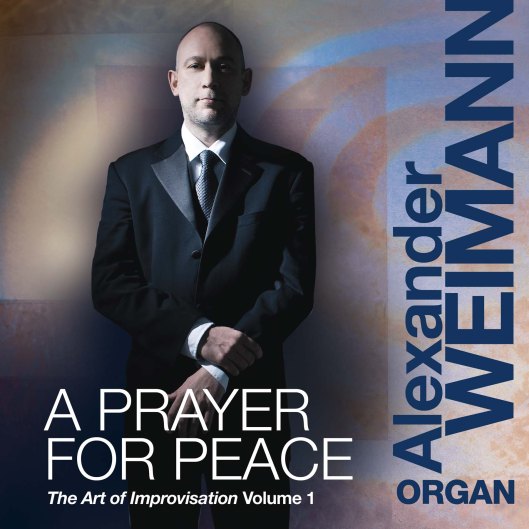
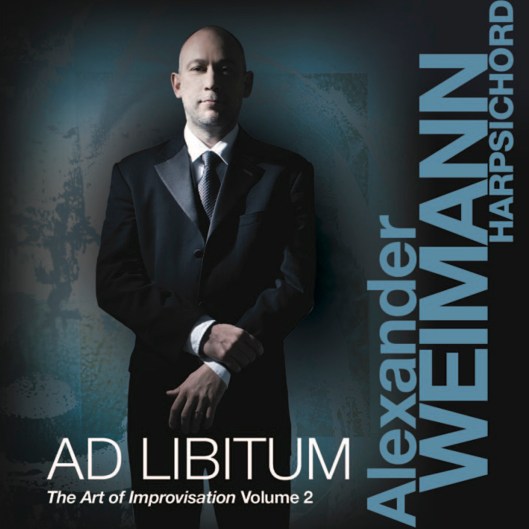
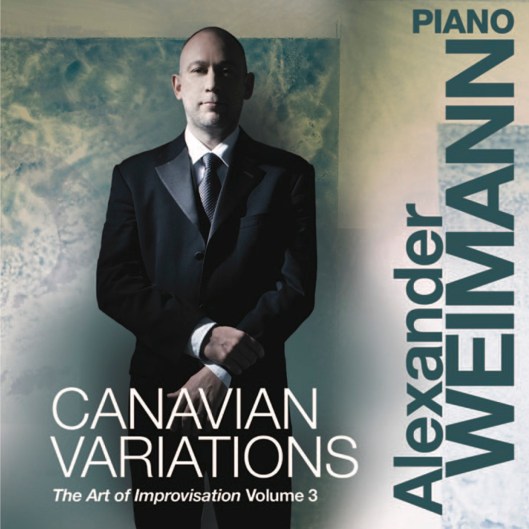
ALEXANDER WEIMANN
The internationally renowned keyboard artist Alexander Weimann has spent his life enveloped by the therapeutic power and beauty of making music.
Alex grew up in Munich. At age three he became fascinated by the intense magic of the church organ. He started piano at six, formal organ lessons at 12 and harpsichord at university (along with theatre theory, medieval Latin and jazz piano.)
He is in huge demand as a director, soloist and chamber player, traveling the world with leading North American and European ensembles. He is Artistic Director of the Pacific Baroque Orchestra in Vancouver and has appeared on more than 100 recordings, including the Juno-award-winning album “Prima Donna” with Karina Gauvin and Arion Baroque orchestra.
Alex offers master classes at European and North American universities and is on faculty at the University of British Columbia.
More than anything, he loves to improvise – something, he says, humans do all the time, just by making conversation.
Alexander Weimann, musicien de renommée internationale, a passé sa vie enveloppé de la beauté et du pouvoir thérapeutique de la musique.
Alex a grandi à Munich. Dès l’âge de trois ans, il a été fasciné par la magie intense de l’orgue d’église. Il a commencé à apprendre le piano à six ans, l’orgue à 12 ans, et le clavecin durant ses études universitaires (parallèlement au latin médiéval, aux études théâtrales et au piano jazz).
Aujourd’hui, il est très recherché comme directeur musical, musicien soliste et chambriste, et il se produit aux quatre coins du monde avec les meilleurs ensembles de l’Amérique du Nord et de l’Europe. Il est directeur artistique du Pacific Baroque Orchestra à Vancouver et figure sur plus de 100 albums, dont Prima Donna — mettant en vedette Karina Gauvin et l’orchestre baroque Arion — qui a été récompensé par un prix Juno.
Alex, qui donne régulièrement des classes de maître dans des universités européennes et nord-américaines, fait partie du corps enseignant de l’Université de la Colombie-Britannique.
Plus que tout, il aime improviser — chose que, selon lui, les humains font tous les jours, par le simple fait de converser.
 Redshift Records